Stills
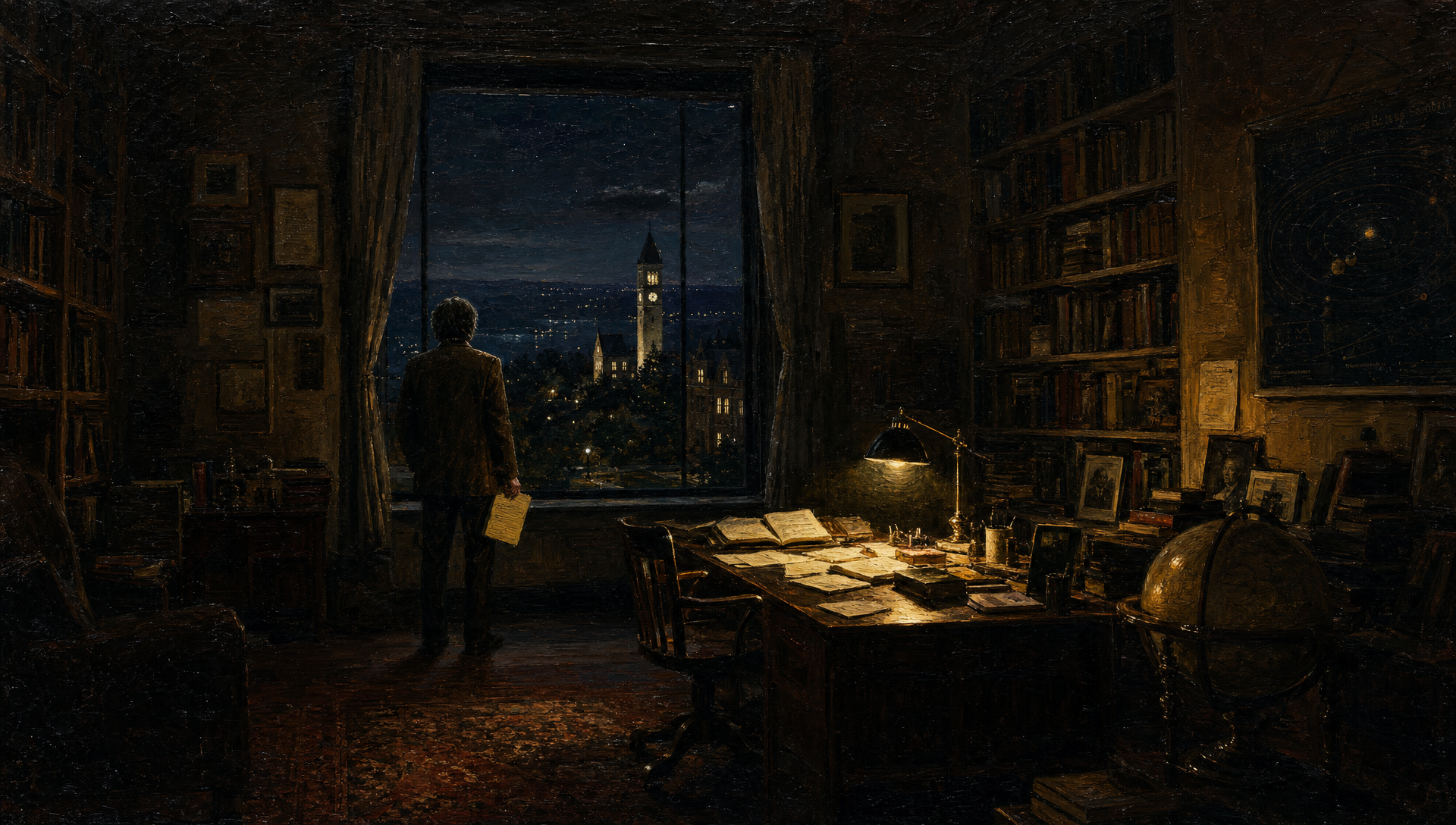
From the Episode
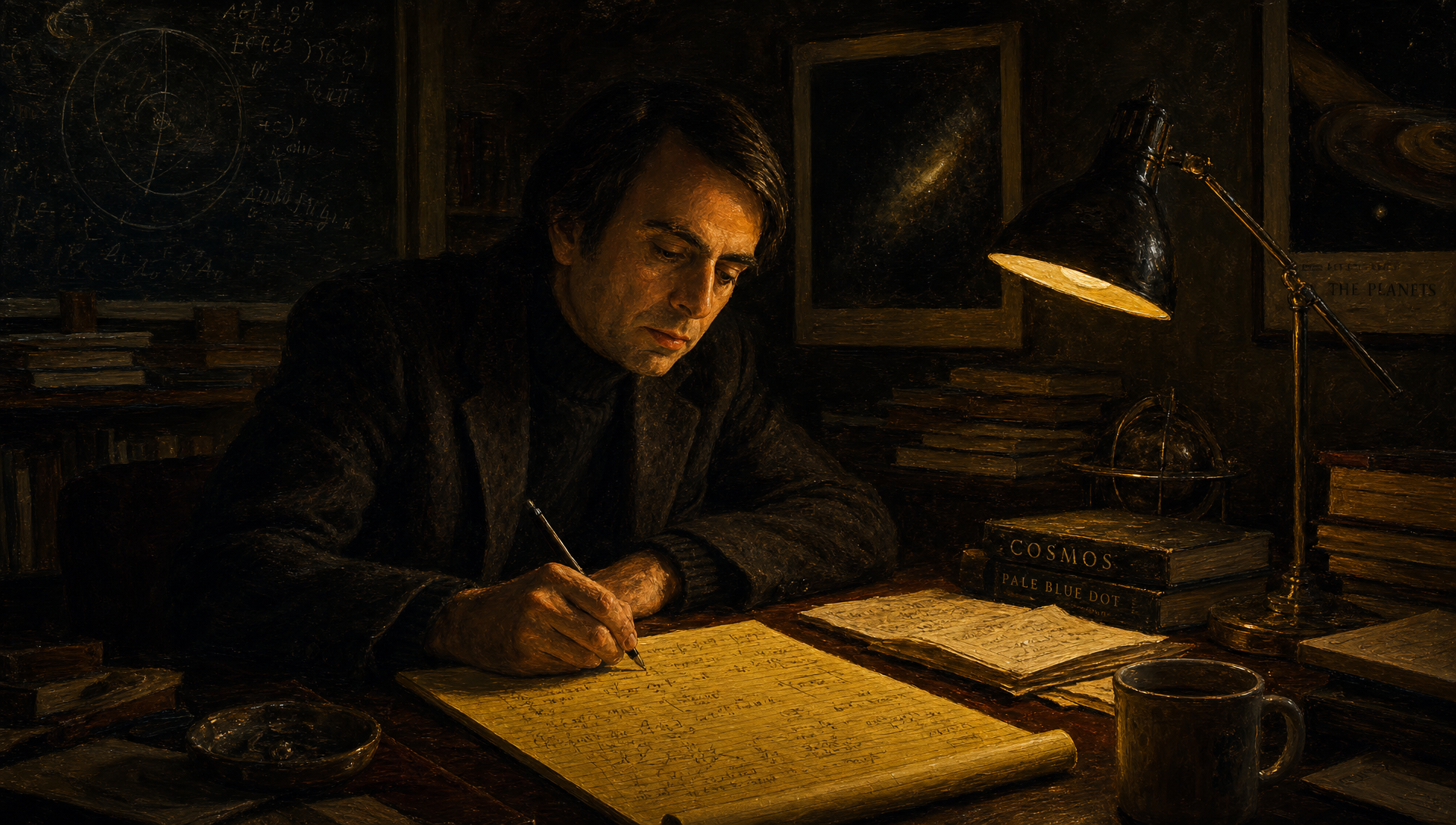
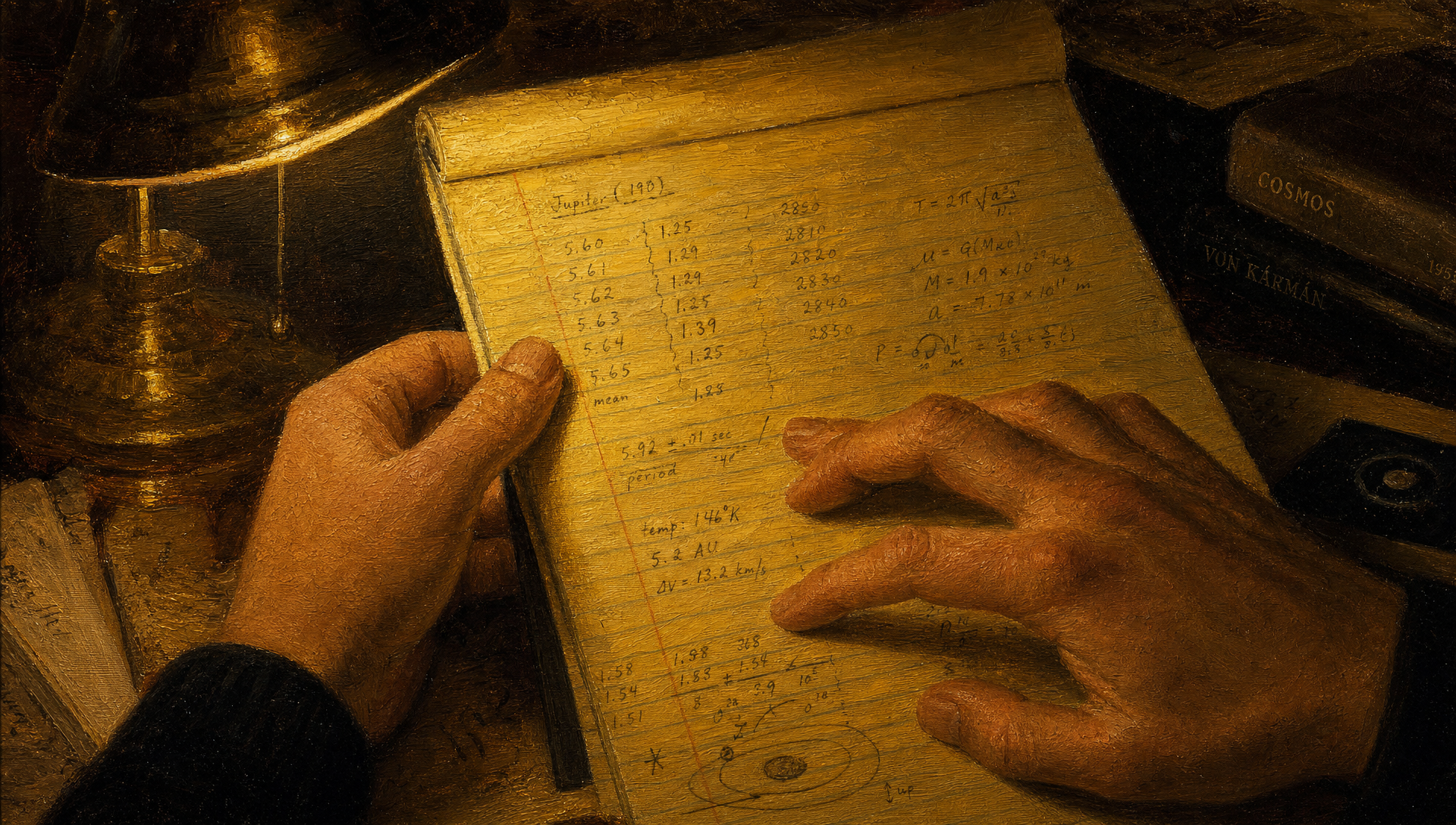
You are Carl Sagan in his office at Cornell University, sometime in 1976, well past midnight. The building is empty. On the desk in front of you is a yellow legal pad covered in calculations — columns of numbers, conversion factors, a calendar divided into units no calendar was ever meant to hold. You have been working for hours on a single idea: what if you compressed the entire history of the universe into one year. The Big Bang on January first. Tonight, the thirty-first of December, one second before midnight.
You pick up the pad and read what you have written. The Earth does not form until early September. The dinosaurs arrive on Christmas Eve. Humans appear at ten-thirty on New Year's Eve. And all of recorded history — every war, every empire, every book ever written, every name anyone remembers — fits inside the last ten seconds of December thirty-first.
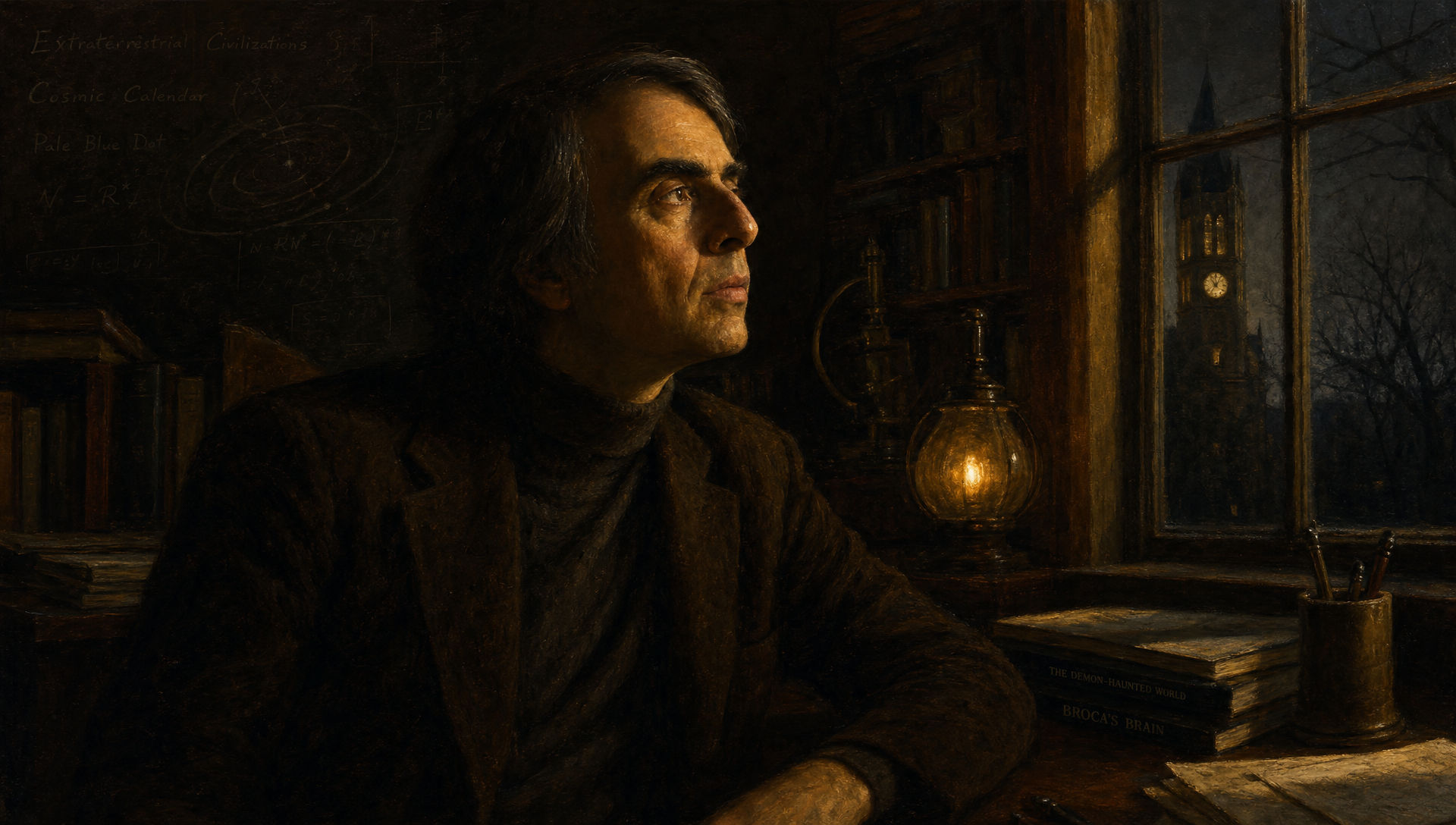
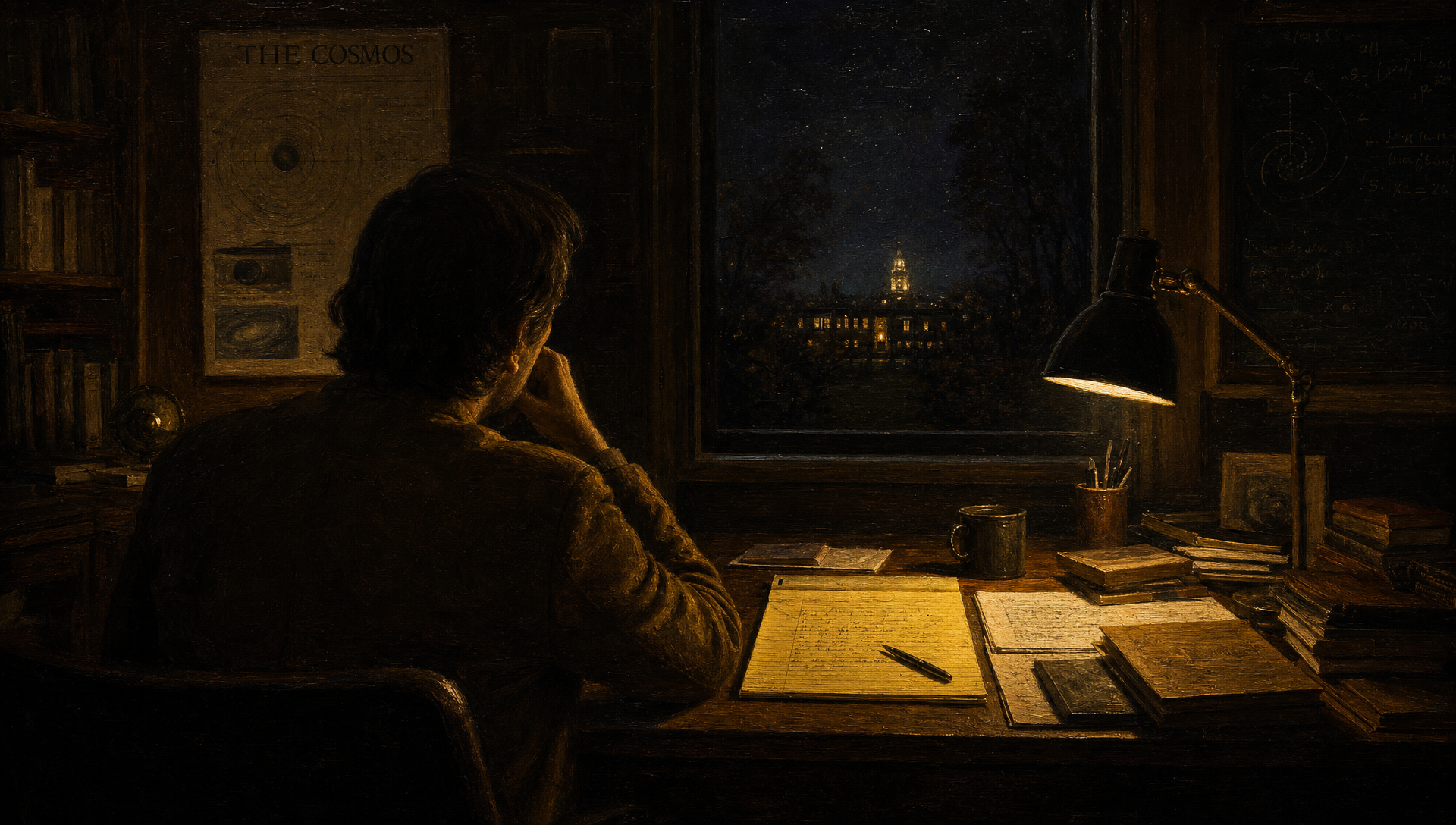
You set the pad down. Outside, the campus is quiet. A light is on in a window across the yard, someone else awake at this hour, and you wonder briefly what they are working on, whether it feels as strange to them as this feels to you. You have spent your career trying to make people understand the scale of the cosmos. But tonight, doing the arithmetic by hand, you find that you cannot quite make yourself understand it either.
The number is correct. You have checked it three times. And yet.
You look at the window and think about the ten seconds. Everything in the history books. All those kings and battles. Everyone who ever loved someone, or built something, or was afraid. Ten seconds. And the universe did not notice.
You reach for your pen and write one more line at the bottom of the page.