Stills
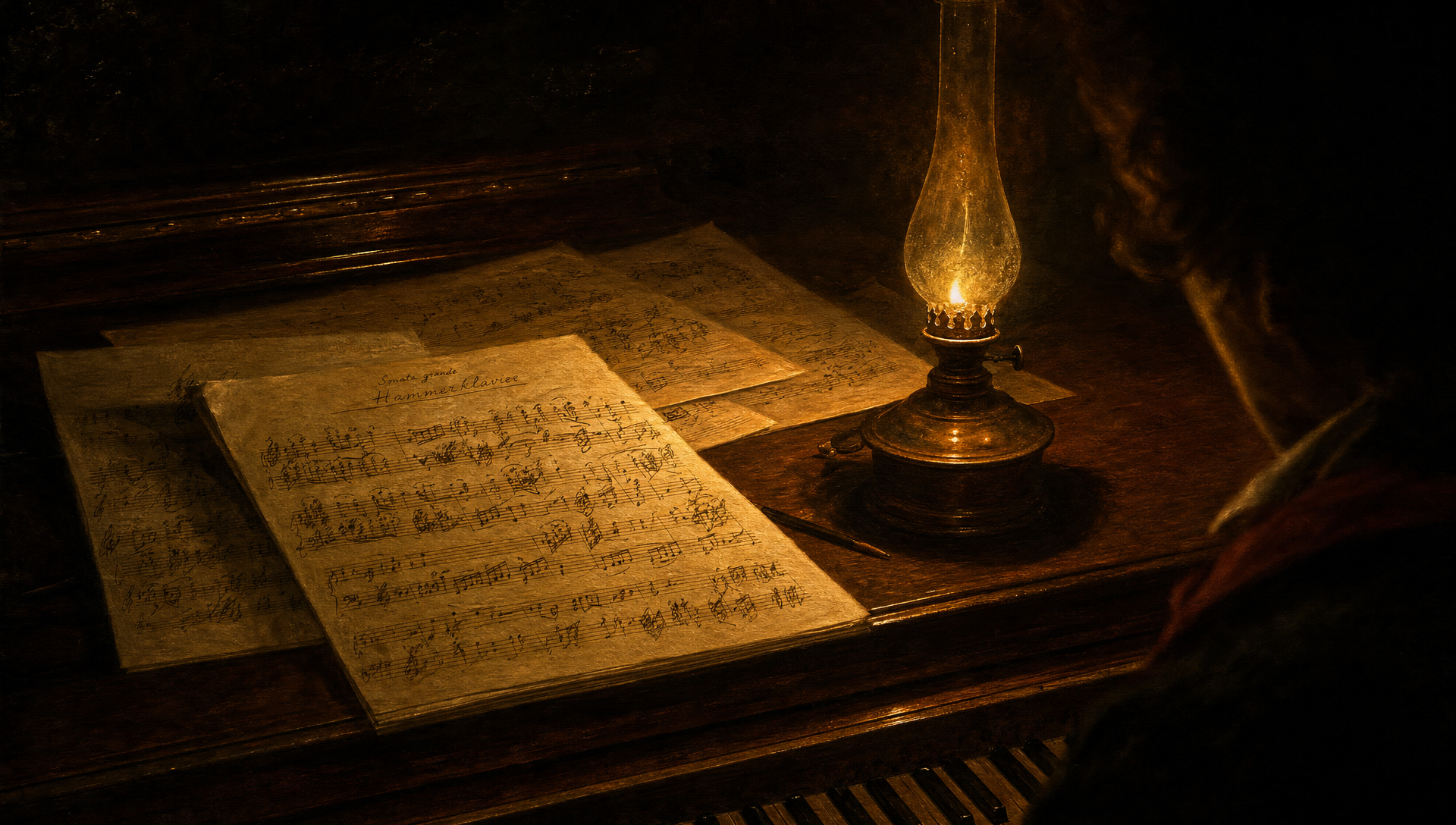
From the Episode
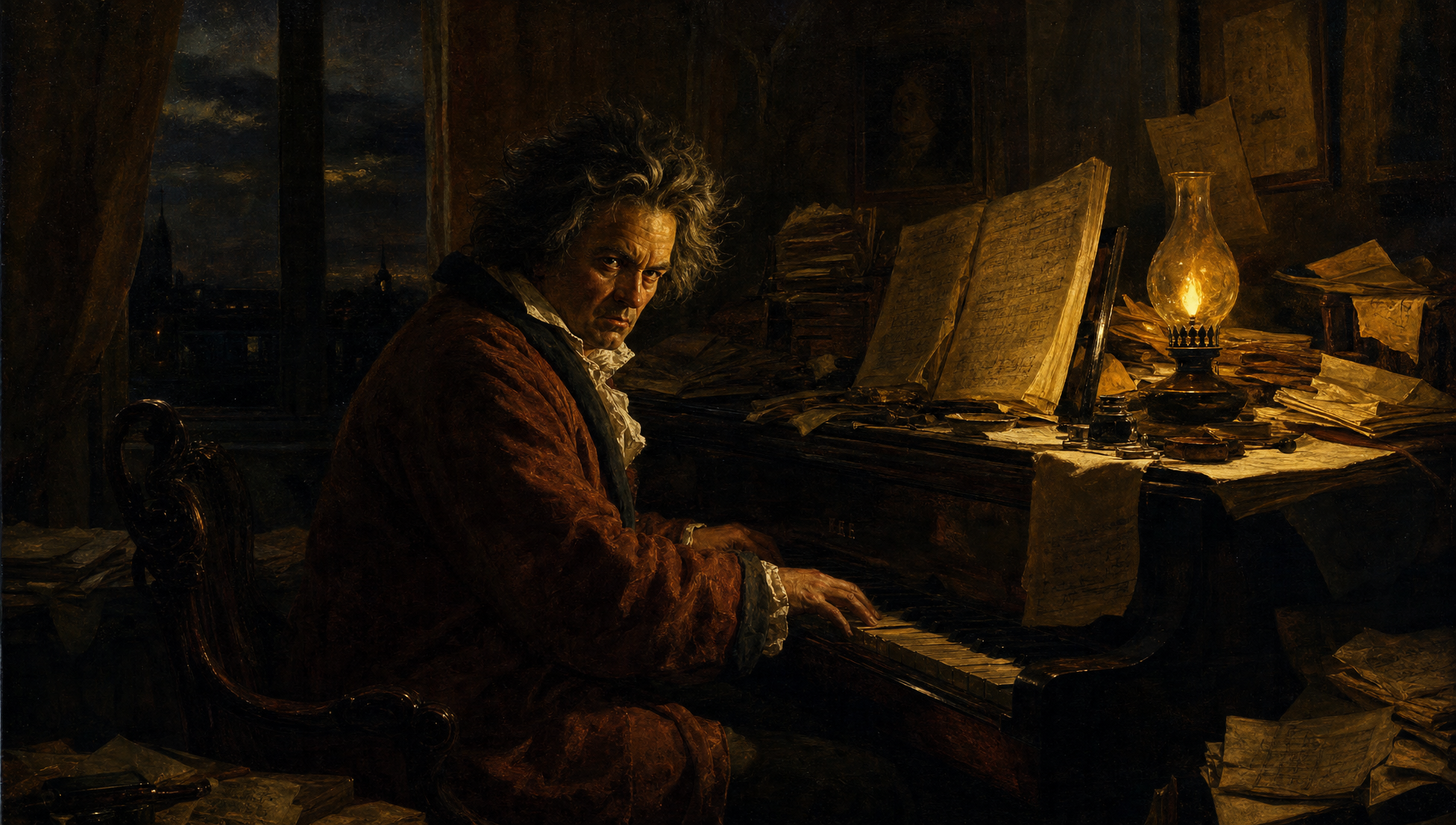
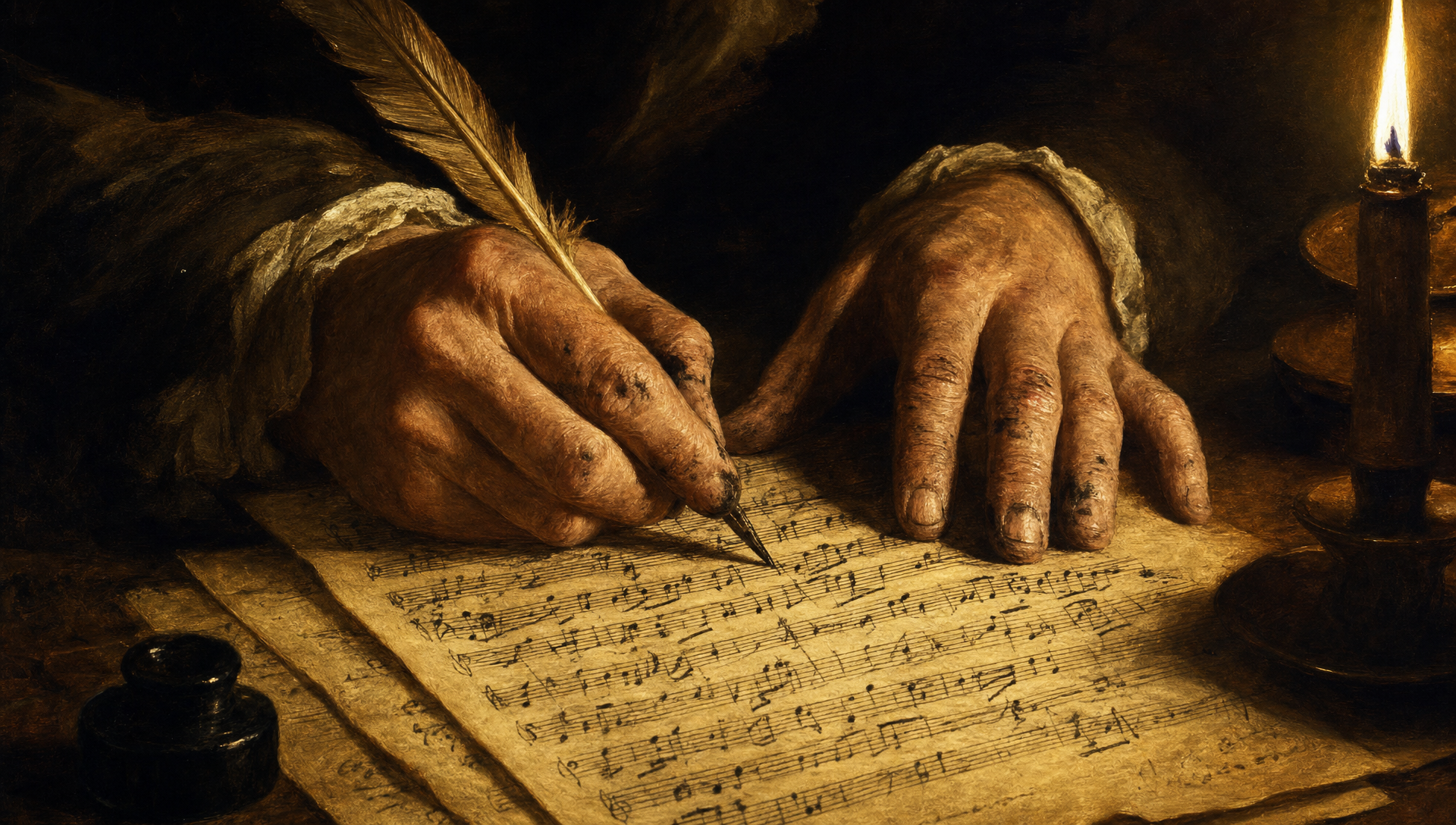
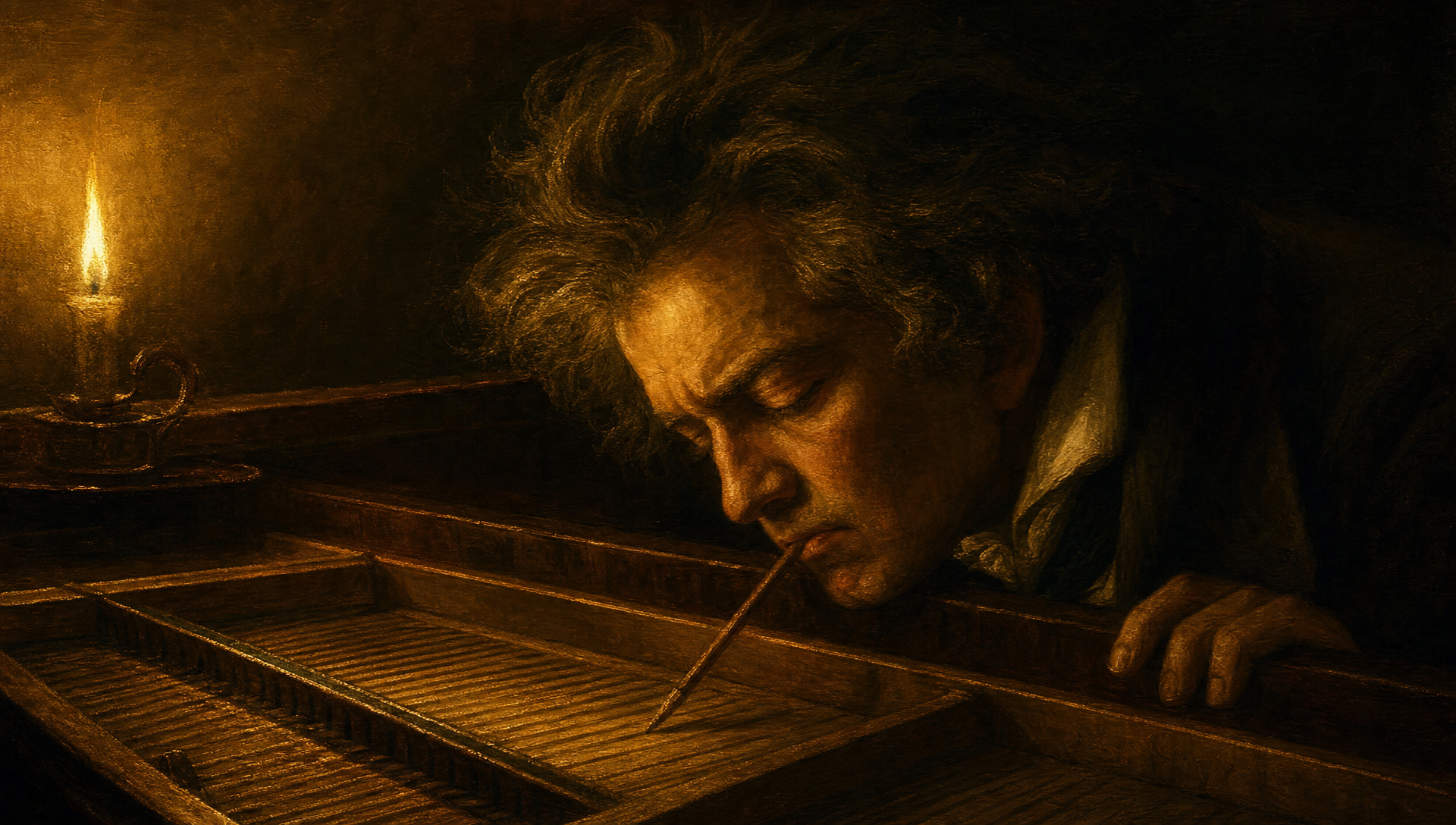
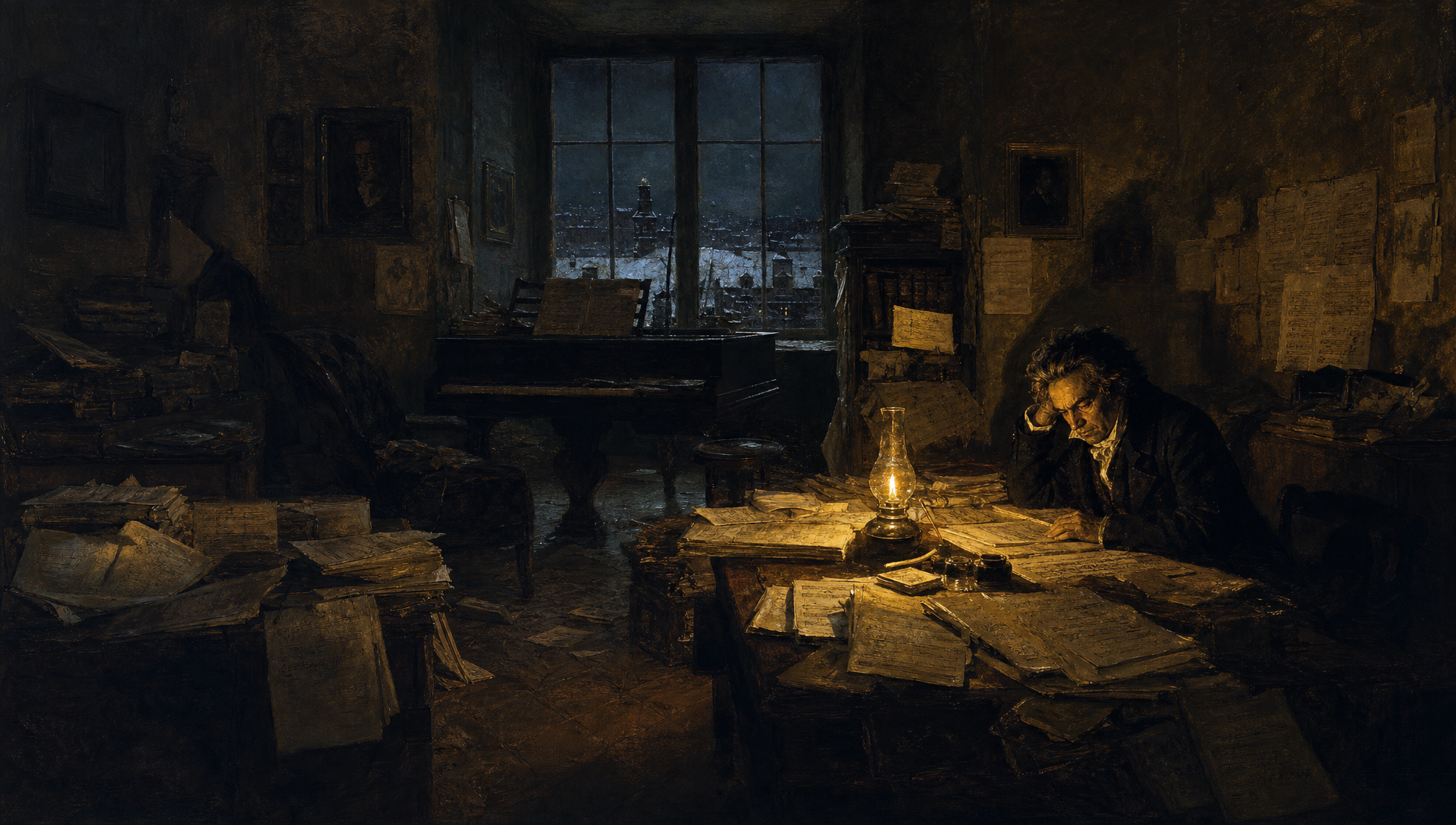
Vienna, the deepest night of the winter of 1818. In a cluttered apartment on the third floor of a building near the Schwarzspanierstraße, Ludwig van Beethoven works alone at his piano. He is completely deaf now, and has been for years. The apartment smells of old coffee, candle wax, and unwashed dishes. Scores and conversation books cover every surface. A single oil lamp burns low on the piano lid, casting amber light across the manuscript paper where he is writing the Hammerklavier Sonata, the most demanding piece of music he has yet composed. He sits at the piano in a stained dressing gown, his hair wild, his hands hovering over the keys. He bites down on a wooden pencil pressed against the soundboard, feeling the vibrations through his teeth and jaw. He strikes a chord, then another, then writes furiously on the manuscript. The notes he hears are inside his skull only, born from memory and imagination. Outside, Vienna sleeps under a thin cover of snow. The city is silent. Beethoven's silence is deeper still. He works through the night, building cathedrals of sound that exist only in the mind, for an audience he cannot hear and a future he will not see.